
How to Identify Waterproofing Problems Before They Become Expensive?
Waterproofing problems rarely begin with a dramatic flood. More often, they start with a tiny crack, a blocked drain, deteriorating sealant, or a faint damp mark that is easy to ignore. By the time water damage becomes obvious, it may have already affected plaster, flooring, insulation, timber, electrical systems, or structural components.
The good news is that most waterproofing failures provide warning signs before they become major repairs. Regular inspections, prompt maintenance, and professional diagnosis can help property owners address moisture problems while the issues are still relatively simple and affordable to resolve.
Why Early Detection Matters?
Water does not always appear directly below or beside the point where it enters. It can travel through concrete, masonry, insulation, joints, and ceiling cavities before becoming visible. As a result, a ceiling stain may be caused by a roof, balcony, bathroom, plumbing connection, or exterior wall several meters away.
A visible stain also does not necessarily mean that the problem is new. Older damage may have been painted over, while a fresh or expanding stain often indicates active moisture. Tracing the source is therefore more important than simply covering the symptom.
If ignored, minor moisture intrusion can lead to:
- Peeling or bubbling paint.
- Mold and persistent musty odors.
- Swollen timber, skirting boards, and door frames.
- Damaged plasterboard and insulation.
- Loose, cracked, or lifting tiles.
- Corrosion of metal fixings and reinforcement.
- Rot in structural timber.
- Damage to electrical fittings.
- Expensive demolition and reinstatement work.
A small sealant repair may cost little. Replacing a wet-area membrane beneath tiles or repairing a damaged roof assembly can cost considerably more.
Check for Visible Warning Signs
The first step is to inspect areas where water is most likely to enter or collect. You do not need specialist equipment to notice many early indicators.
Stains And Discoloration
Look for brown, yellow, grey, or darker patches on ceilings, walls, floors, and around windows. Pay close attention to rooms below bathrooms, balconies, terraces, roofs, and plumbing areas.
Mark the edge of a stain with a pencil and date it. Check again after rainfall or after the nearby shower, sink, or appliance has been used. If the mark expands, darkens, or feels damp, the problem may still be active.
Peeling And Bubbling Finishes
Paint that flakes, blisters, or bubbles is often reacting to moisture beneath the surface. Wallpaper may loosen, and plaster may soften or crumble. Do not assume the cause is poor paint quality, particularly if the problem is concentrated around a wet area or external wall.
Mold And Musty Smells
Mold growth, mildew, or a persistent damp smell can indicate prolonged moisture, even when no water is visibly pooling. Inspect corners, cupboards, behind furniture, beneath sinks, around window frames, and inside ceiling or under-floor spaces where accessible.
Cleaning mold may temporarily improve the appearance, but it will not address the underlying leak. If moisture remains, mold is likely to return.
Efflorescence
White, powdery deposits on masonry, concrete, grout, or tiles are known as efflorescence. They form when water moves through a porous material, carrying dissolved salts to the surface. Efflorescence can indicate water movement through walls, floors, balconies, basements, or foundations.
It is not always proof of a failed waterproofing membrane, but it is a useful warning that moisture is travelling through the building fabric.
Damaged Flooring And Tiles
Loose, hollow-sounding, cracked, or lifting tiles may indicate moisture behind them, movement in the substrate, or deteriorated adhesive. Cracked or missing grout also creates an easier path for water to reach the waterproofing layer.
Inspect the floor outside showers and bathrooms, as well as the wet area itself. Swollen timber, soft flooring, warped boards, or staining in the room below deserve prompt investigation.
Inspect High-Risk Areas
Some locations fail more frequently because they experience constant water exposure, movement, weather, or complex junctions.
Bathrooms And Wet Areas
Check shower corners, wall-to-floor joints, pipe penetrations, drains, taps, bath edges, and shower screens. Deteriorated silicone, missing grout, cracked tiles, or gaps around fixtures can allow water behind the finished surface.
After using the shower, look for water escaping beyond the screen or pooling near the bathroom door. A shower that repeatedly wets adjacent walls or floors can cause damage even when the membrane itself is still intact.
Do not rely on grout alone as the waterproofing system. Grout and sealant are important maintenance components, but the concealed membrane beneath the tiles provides the primary barrier. If that membrane has failed, surface cleaning or regrouting may not be enough.
Roofs And Gutters
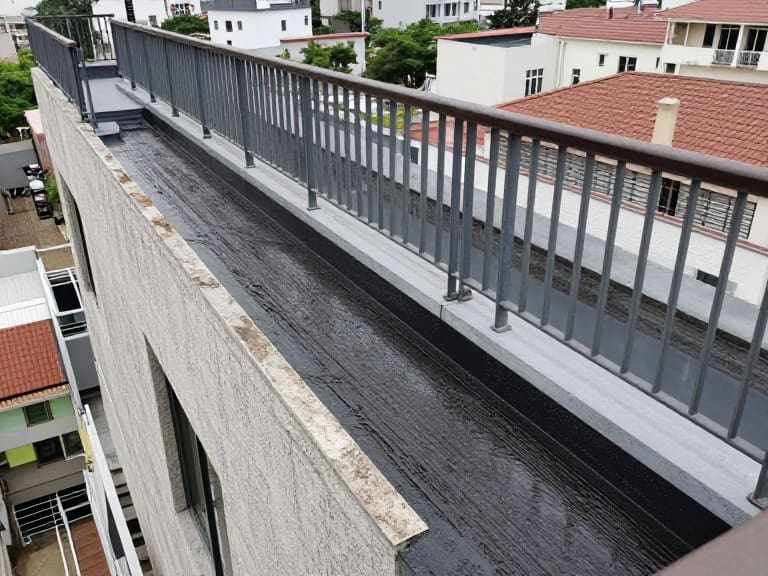
Inspect the roof after heavy rain if it is safe to do so. Look for ponding water, cracked membranes, damaged flashing, lifted roof materials, punctures, rust, and areas where debris collects.
Clean gutters and downpipes regularly. Blockages force water to overflow against fascia boards, walls, ceilings, and roof edges. Check that downpipes discharge water away from foundations and that roof drainage does not spill onto balconies or lower roofs.
Membranes should also be checked for blisters, peeling, cracking, or punctures. Flat roofs and terraces are particularly vulnerable when drainage is inadequate.
Balconies And Terraces
Balconies over living spaces deserve special attention. Inspect drains, outlets, expansion joints, tile surfaces, edge details, balustrade penetrations, and wall junctions.
Water pooling after rain is a significant warning sign. Cracked tiles or grout, blocked drains, and failed sealant around posts or doors can allow moisture to penetrate into the structure and the ceiling below. Waterproofing systems are especially vulnerable where different materials meet or where fixtures penetrate the membrane.
Basements And Foundations
Basements may show water entry through walls, floors, construction joints, cracks, service penetrations, or failed drainage systems. Look for damp patches, standing water, salt deposits, rusting metal, mold, and musty odors.
Ground levels should slope away from exterior walls. Poor surface drainage, leaking downpipes, and saturated soil can place constant pressure on below-ground waterproofing.
Take Action Before Damage Spreads
When you discover a possible waterproofing problem, avoid simply repainting or applying a surface patch. First, limit water exposure where possible. Stop using an affected shower, clear blocked drains, move belongings away from damp areas, and address obvious overflowing gutters.
Document the condition with photographs and notes. Do not remove tiles, open walls, or conduct invasive testing unless you understand the risks and have identified the likely source.
A professional waterproofing specialist, building inspector, or plumber may use moisture meters, thermal imaging, dye testing, flood testing, or controlled inspections to locate the source. These methods can reduce unnecessary demolition, but testing must be appropriate for the building and the suspected failure.
Repairs should address the cause, not just the visible damage. Depending on the situation, the solution may involve replacing the sealant, repairing the flashing, clearing drainage, correcting falls, repairing the plumbing, renewing the membrane, or removing and reinstating finishes. Bathrooms and other concealed systems may require the removal of tiles and screed before the waterproofing can be properly repaired.
Create a Regular Inspection Routine
Prevention is less expensive when it becomes part of normal property maintenance. Carry out visual checks at least twice a year and after severe weather. Inspect bathrooms, roofs, gutters, balconies, windows, basements, and areas below plumbing fixtures.
Keep records of repairs, product warranties, membrane installations, and previous leaks. During renovations, ensure that waterproofing details are documented and that materials are compatible with the substrate and with one another. Pay particular attention to corners, joints, changes in level, drains, and every penetration through the waterproofed surface.
The most valuable habit is responding to small signs immediately. A cracked joint, a faint stain, or a blocked drain may seem unimportant, but each can provide water with an entry path. Finding and correcting that path early protects the building, reduces disruption, and helps prevent a manageable maintenance task from becoming a major reconstruction project.